A Home Away From Home for Jewish Teens & Young Adults
Bunker of Light began with an open Shabbos table in Toms River. It became a steady family address for young people who need room to breathe, belong, and find their next step — and this year, a campus in West Virginia for the Yomim Tovim.
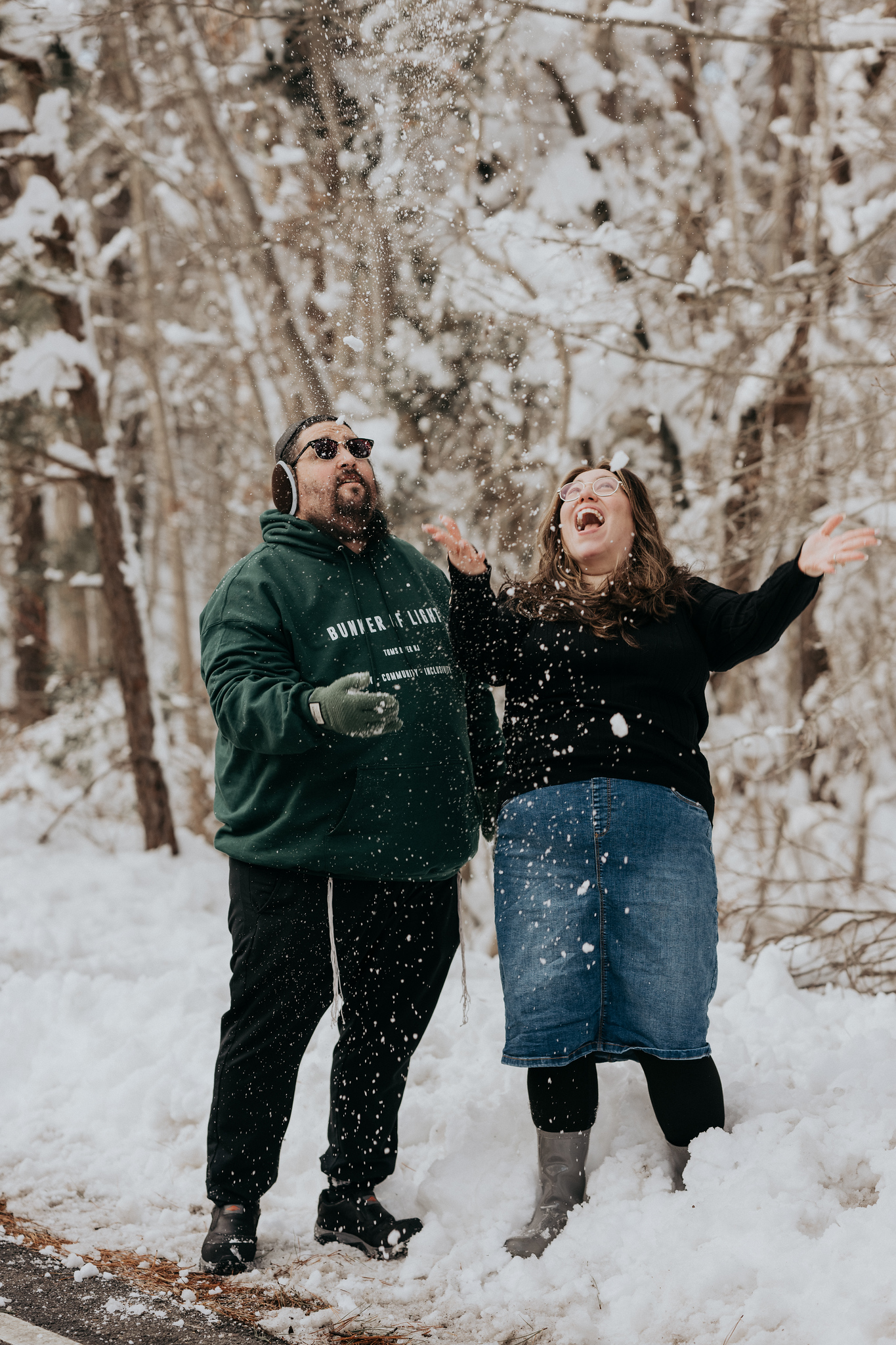
They know what an open home can change.
Yosef and Sarah Shidler are baalei teshuvah and a Chabad family. Yosef learned early what it meant to find his own way into Jewish life. Sarah spent formative years being welcomed into other people's homes and never forgot what that safety felt like. Together, they built the kind of home they believe every young person should be able to find: warm, well-fed, honest, and open.
It started with a man sitting alone in a parked car.
It was night, outside a kosher restaurant in Lakewood, and Yosef Shidler was not looking for a mission. He was a Chabad guy with a wedding-photography business and a houseful of Shabbos guests most weeks. Then he noticed a cluster of teenagers hanging around outside — kids who didn't look like the Lakewood crowd he knew. And it landed on him, all at once: these are our own brothers and sisters. They're struggling right in front of me — and what am I actually doing to help them?
He didn't move. He sat and stared, and it felt like a slap. He had no program, no connection to that world, and no room — his house was already full every Shabbos. But something had shifted. Once you see something like that, you can't un-see it.
The hosting came first.
Before there was a Bunker of Light, there was just a home. Ask Yosef when it started and he goes back to the chuppah: even during sheva brachos, if friends needed a place, the answer was just come stay by us. It was never framed as outreach. It was simply how they lived.
For Sarah, it's a debt she has spent her life repaying. She didn't grow up in an open home — she grew up in other people's. When her mother was hospitalized through most of her middle-school years, her friends' families took her in. When her parents divorced, she moved to Israel for high school and was hosted nearly every week for four years by people who owed her nothing. "I learned firsthand what darkness really looks like — and what it looks like to be taken in by complete strangers. So of course we were going to have an open home."
They married, moved to the Lakewood area in 2016, and in 2019 bought a house in Toms River on — of all streets — Bunker Hill Drive. When the vision needed more room than the house had, they took on a loan and expanded: more beds, more space, for whatever was coming. Yosef — a man who once couldn't build a sukkah — taught himself framing and codes from YouTube and became the contractor himself. He doesn't pretend he did it alone: too many things that should have taken years came together in record time. "The mission chose me. I didn't choose the mission."
Shabbos is where the relationship begins.
The first holiday gatherings taught the Shidlers that an open door needs both warmth and structure. Today the Bunker hosts separate boys' and girls' Shabbos programs with clear house rules, parental collaboration for minors, and rabbinic guidance.
The structure makes room for something unusually relaxed: a long meal, a couch, a nap, a walk, a question that would feel too risky somewhere else. As one guest put it, “It's also very nice that you're not expected to be on a program.”
The goal is not to manufacture an experience or force observance. It is to create a genuinely Jewish family environment where respect moves in both directions. “People learn to respect us because we respect them,” Yosef explained in the interviews.
Physical safety before Torah.
If you want the Shidlers' philosophy in a sentence, Sarah will hand it to you standing in front of an open cabinet: before a word of Torah, before any talk of God, comes the body. "A lot of these kids come from broken homes. Physical safety and security come before anything. If they want to talk Torah, talk God, we're here. But first they need to feel secure and connected as people."
In practice it looks almost comically small, and that's the genius of it: cabinets overflowing with snacks, a stocked fridge, a candy jar, blankets, pillows. None of it is incidental. It is the whole theology of the place, in seltzer and cookies: you are worth feeding well, before you are asked for anything at all.
Even the family dogs are part of it — gentle, fluffy doodles who somehow find the one guest who needs them each week, settling beside whoever is quietest at the table. Guests repeatedly described them as a calming presence that makes it easier to settle into an unfamiliar home.
The line their rabbanim gave them is the one the whole house is built on: "First make a human being. Then you can make a Jew." And they're careful to make one thing unmistakable — none of this is a rebellion against rabbinic authority. Just the opposite: they work with their rabbanim on all of it.
The address stays open after Havdalah.
Shabbos is the Bunker's heart and often the first point of connection. But the interviews made one thing clear: this is not only a weekend program. During the week, people stop in for dinner, call for advice, or need a steady adult beside them while they sort out a difficult next step.
Depending on the person and what is safe and appropriate, that may mean help replacing documents, finding work, getting to an appointment, speaking with a school or family, or connecting with licensed clinical care. Bunker is not a therapy practice, shelter, or residential program. It is often the bridge between a difficult moment and the professional or community resource that can carry the next stage.
The goal is not dependence. In Yosef's words, “Our goal is to set you up for success.” Success may look like work, school, care, recovery, a healthier family relationship, a stable home, or simply enough steadiness to choose what comes next.
Chabad-rooted, without a mold.
The Shidlers are a Chabad family and the Bunker is shaped by Chabad's insistence that every Jew matters and every person can build an authentic relationship with Hashem. Bunker of Light is independent and does not present itself as the official Chabad house of Lakewood or Toms River.
That distinction matters. The home is not trying to fit anyone into a single mold. It gives a young person room to be multifaceted—to be unsure, observant, questioning, tired, hopeful, or several of those things at once. A guest described the freedom simply: “You don't need to be a specific person. You can ask your questions and try to get answers.”
A real family, not an institution.
The interviews returned again and again to the Shidler children and the family doodles. Guests are not entering a staged program space. They are entering a home where the children greet people, the dogs wander through the room, and family life continues around a longer table.
Yosef said it best: “Our home is not just our house—it's our family.” That ordinary family texture is not decoration. It is part of why a guest can arrive guarded and, in the words of one interviewee, feel their shoulders drop.
The next frontier is in our own backyard.
Rosh Hashanah 5786, sixteen boys with nowhere to go for Yom Tov slept in the house on Bunker Hill Drive. The year that followed was a Shabbos table nearly every week. By Pesach it was about twenty-five boys and girls, in two separate houses. Then the neighbors complained about the crowd, and Yosef was asked to leave a shul.
The Gross family answered that by opening their property in High View, West Virginia. Seventy people came for Rosh Hashanah 5787. Forty came back for Simchas Torah — in one sukkah, with bochurim from Crown Heights who stayed up with the group until almost sunrise. Every guy got an aliyah; the Sefer Torah was carried to the dorm building and read there, outside. It was a sober Simchas Torah on purpose, and nobody missed what was not there.
Chabad sends shluchim to the ends of the earth, and the Shidlers are Chabad to the bone. But the teens being labeled “at risk” in Lakewood, Monsey and Crown Heights are a frontier too, and the labels mostly stop people from asking what the kid is actually carrying. A young person needs a reason to come back: a place to belong, someone who notices when he is gone, and someone who does not start every conversation with criticism. That is shlichus. That is the next frontier. See the photos and the whole story →
Where this is going.
The current family home has finite space and the need regularly exceeds what one household can responsibly carry. The future is not simply a larger version of the same informal model. It is a sustainable bridge environment with more room, clearer staffing, and a stronger professional backbone.
The dream is a genuine campus: a home for their family, and alongside it a real, ongoing place where a young person could land, breathe, and sort out work and health and faith and life — not for a chaotic weekend, but for as long as it takes to get steady. And beyond the building, Sarah's real vision: "More people opening their homes to these children. Because at the end of the day, these are your brothers and sisters — the ones who need extra love."
This was never meant to be a private heroism. They are asking for company. "Whoever wants to get involved, in any way at all — extra food, a hand, a connection, a Shabbos opened in your own home — we are always down to collaborate. Always."
"When you walk in the door, your shoulders kind of drop." — Young adult guest
The first step can be as simple as reaching out.
You do not need the perfect words or a complete plan. Tell us what is going on, and we will start with a quiet, human conversation.